


The structure of your compensation plan is what ultimately determines how your MLM business grows, how distributors behave, and how profits are distributed across the network. If you’re trying to understand MLM compensation plans explained or comparing binary vs unilevel vs matrix, the goal isn’t just to pick a plan—it’s to choose a system that aligns with your business model and long-term scalability.
In 2026, MLM businesses are no longer built on recruitment alone. They rely on clear commission structures, automation, and distributor trust. A well-designed MLM System creates motivation, ensures transparency, and drives consistent growth. On the other hand, a poorly structured plan leads to confusion, low retention, and stagnant networks.
This guide breaks down each plan in depth, with real earning examples, practical insights, and clear use cases to help you make the right decision.
What is an MLM Compensation Plan and Why It Matters?
An MLM compensation plan is the framework that defines how distributors earn income through product sales, referrals, and team performance. It controls how money flows within the network and directly impacts distributor motivation and retention.
At its core, the compensation plan determines:
-
- How commissions are calculated and distributed
- How the network structure is built and expanded
- How bonuses and incentives are triggered
- How scalable the business model becomes over time
A strong compensation plan does more than just pay commissions. It creates a system where effort is rewarded consistently, teams are encouraged to grow, and the business can expand without operational friction.

How MLM Compensation Plans Work in Real Scenarios
In a real MLM business environment, compensation plans operate through structured workflows supported by software. When a distributor joins the network, they are placed within a specific structure—binary, unilevel, or matrix.
As they begin selling products or referring new members:
-
- Their activities are tracked in real time
- Sales volumes are recorded across levels
- Commission rules are applied automatically
- Earnings are calculated and credited instantly
This system ensures accuracy, transparency, and scalability. Without automation, managing commissions across hundreds or thousands of distributors becomes inefficient and error-prone. At the same time, it’s important to understand that profitability is not driven by compensation plans alone, but by how effectively they are executed through technology.
To explore this connection in detail, read along: Is MLM Software Profitable in 2026? Complete Guide to Growth & Revenue, which explains how automation and smart systems directly impact revenue and long-term growth.
Binary vs Unilevel vs Matrix: Understanding the Core Difference
Before diving deeper, it’s important to understand how these three major MLM compensation plans differ in structure and strategy.
-
- The binary plan focuses on balance and teamwork
- The unilevel plan emphasizes simplicity and direct recruitment
- The matrix plan ensures controlled and structured growth
Each plan creates a different type of distributor behavior, which is why choosing the right one is a strategic decision rather than a technical one.
| Criteria | Binary Plan | Unilevel Plan | Matrix Plan |
| Network Structure | Two legs (left & right) | Unlimited frontline recruits | Fixed width and depth (e.g., 3×3, 5×5) |
| Growth Model | Balanced team expansion | Open and flexible recruitment | Controlled and structured expansion |
| Recruitment Limit | Limited to 2 direct members | No limit on direct recruits | Limited by matrix width |
| Commission Basis | Based on weaker leg volume | Based on level-wise performance | Based on filled matrix positions |
| Earning Potential | High (if balanced) | Moderate to high | Stable but capped |
| Complexity Level | Medium | Low (easy to understand) | Medium |
| Spillover Benefit | Strong (common) | Limited | Moderate (structure-based) |
| Best For | Team-driven growth | Fast recruitment & simplicity | Predictable and fair growth |
| Risk Factor | Imbalance between legs | Over-recruitment without engagement | Limited scalability for top performers |
| Ideal Business Type | Fast-scaling MLM startups | Product-based MLM businesses | Small to mid-sized structured networks |
Binary Compensation Plan: Balanced Growth with High Earning Potential
The binary compensation plan is designed around a simple but powerful concept—each distributor builds two teams, commonly referred to as the left leg and the right leg. While the structure looks simple, the strategy behind it revolves around maintaining balance between both sides.
In a growing MLM business, this balance becomes the key driver of earnings and team collaboration.
How the Binary Plan Works

When a distributor joins:
-
- They can recruit only two direct members
- These members form the left and right legs
- Additional recruits are placed within these legs
- Commissions are calculated based on the weaker leg’s volume
This approach encourages distributors to actively support both sides of their network instead of focusing on just one.
Real Earning Example
Consider a distributor managing two teams:
-
- Left team generates: $6,000 in sales
- Right team generates: $4,000 in sales
In a binary system, commissions are calculated based on the weaker leg.
If the commission rate is 10%:
-
- Eligible volume = $4,000
- Earnings = $400
This model ensures fairness while promoting consistent team growth.
Why Businesses Choose Binary Plans
Binary plans are widely used because they create momentum and teamwork. Distributors are naturally encouraged to help their downline grow, which improves retention and engagement.
They are particularly effective for:
-
- Fast-scaling MLM startups
- Businesses focused on team-building culture
- Networks that benefit from spillover support
Limitations to Consider
While powerful, binary plans require careful management. If one leg grows significantly faster than the other, earning potential may be limited until balance is restored. This makes ongoing monitoring and support essential.
Unilevel Compensation Plan: Simplicity and Unlimited Expansion
The unilevel compensation plan is one of the most straightforward and widely adopted structures in the MLM industry. Unlike binary, it removes restrictions on the number of direct recruits, allowing distributors to build a wide and flexible network.
This simplicity makes it highly attractive for beginners and product-focused MLM businesses.
How the Unilevel Plan Works

In a unilevel structure:
-
- Distributors can recruit unlimited members directly
- All recruits are placed on the first level (frontline)
- Commissions are paid across multiple levels (e.g., 5–10 levels deep)
This creates a broad network where income is generated from both direct and indirect sales.
Real Earning Example
Imagine a distributor recruits 15 members directly, and each generates $100 in sales.
If the Level 1 commission is 10%:
-
- Earnings = 15 × $100 × 10% = $150
If deeper levels contribute:
-
- Level 2 commission (5%)
- Level 3 commission (3%)
Total earnings increase as the network expands, even without strict structural limitations.
Why Businesses Prefer Unilevel Plans
Unilevel plans are popular because they are easy to understand and easy to explain. This reduces onboarding friction and helps new distributors get started quickly.
They are ideal for:
-
- Product-driven MLM businesses
- Companies targeting mass recruitment
- Startups looking for a simple and scalable model
Limitations to Consider
While flexible, unilevel plans can sometimes lead to over-recruitment without proper engagement. If distributors focus only on adding members without supporting them, retention may drop over time.
Matrix Compensation Plan: Structured and Predictable Growth
The matrix compensation plan is designed to bring order and predictability to MLM network expansion. It uses a fixed structure, such as 3×3 or 5×5, where width and depth are predefined.
This controlled approach ensures that growth happens evenly across the network.
How the Matrix Plan Works
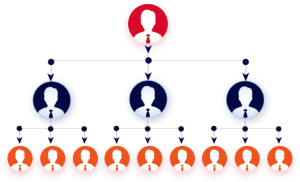
In a typical 3×3 matrix:
-
- Each distributor can have only 3 direct recruits
- The structure expands across 3 levels
- Additional recruits are placed through spillover
This creates a uniform and easy-to-duplicate system.
Real Earning Example
In a 3×3 matrix:
-
- Level 1: 3 members
- Level 2: 9 members
- Level 3: 27 members
If each member generates $50 and the commission rate is 5%:
-
- Total volume = $1,950
- Earnings = $97.50
This model provides steady, predictable income rather than rapid spikes.
Why Businesses Use Matrix Plans
Matrix plans are ideal for businesses that want controlled expansion and equal opportunity distribution. Spillover helps new distributors earn even if they recruit slowly.
They are best suited for:
-
- Small to mid-sized MLM companies
- Businesses focused on fairness and duplication
- Networks that prioritize long-term stability
Limitations to Consider
The fixed structure can limit earning potential for high-performing distributors. Once the matrix is filled, additional growth may not directly increase income unless new matrices are opened.
Which MLM Compensation Plan is Best in 2026?
Choosing the best MLM compensation plan depends on your business goals, target audience, and growth strategy.
-
- Binary plans work best when teamwork and fast scaling are priorities
- Unilevel plans are ideal for simplicity and aggressive recruitment
- Matrix plans suit businesses that prefer controlled and predictable growth
In practice, many successful MLM companies combine elements of multiple plans to create a hybrid structure that balances flexibility, fairness, and earning potential.
The Role of MLM Software in Managing Compensation Plans
As MLM networks grow, managing compensation manually becomes impractical. Modern MLM software plays a crucial role in ensuring that every transaction, commission, and bonus is calculated accurately.
A robust system helps businesses:
Platforms like ARM MLM support multiple compensation plans within a single system, allowing businesses to adapt and scale without operational challenges.
Final Thoughts
Understanding MLM compensation plans is fundamental to building a scalable and profitable network marketing business in 2026. While comparing unilevel vs matrix helps clarify structural differences, long-term success depends on how well your chosen plan aligns with your business model, target audience, and growth strategy.
A well-designed compensation plan goes beyond payouts. It directly influences distributor motivation, retention, and overall network performance. When the structure is clear, fair, and easy to follow, it builds trust and encourages consistent participation across all levels of the network.
At the same time, technology plays a critical role. Without reliable MLM software, even the best compensation plan can fail due to calculation errors, lack of transparency, and operational inefficiencies. With the right system in place, businesses can automate commissions, track performance in real time, and scale without limitations.
In a competitive MLM landscape, companies that prioritize clarity, automation, and scalability are the ones that achieve sustainable growth. The right combination of compensation strategy and technology creates a strong foundation for long-term success.
Frequently Asked Questions
1. Which MLM compensation plan is the most profitable?
Binary and hybrid compensation plans often offer higher earning potential because they reward team performance and network balance. However, actual profitability depends on factors like distributor activity, product demand, and overall business strategy.
2. What is the easiest MLM compensation plan to understand?
The unilevel compensation plan is considered the simplest, as it allows unlimited direct recruits and follows a straightforward level-based commission structure that is easy for beginners to follow.
3. Can an MLM business use multiple compensation plans?
Yes, many modern MLM businesses use hybrid compensation plans that combine binary, unilevel, and matrix structures to balance flexibility, earning potential, and long-term stability.
4. Is binary better than unilevel?
Binary plans can generate higher earnings through balanced team growth, while unilevel plans offer more flexibility and ease of use. The better option depends on your business goals and distributor preferences.
5. Why is MLM software important for compensation plans?
MLM software is essential for managing complex commission structures, automating payouts, tracking distributor performance, and ensuring transparency, all of which are critical for scalable and efficient operations.
Related Blogs
 API Integrated MLM Software – To Maximize Network Marketing Success
- CRM MLM Software: Grow Your MLM Business Smarter
- What 13+ Years of Building MLM Software Taught Us about Modern Direct Selling?
- Binary vs Unilevel Compensation Plan: Which One Fits Your MLM Business?
- MetaTrader Clone Script: Build a Scalable Trading Platform